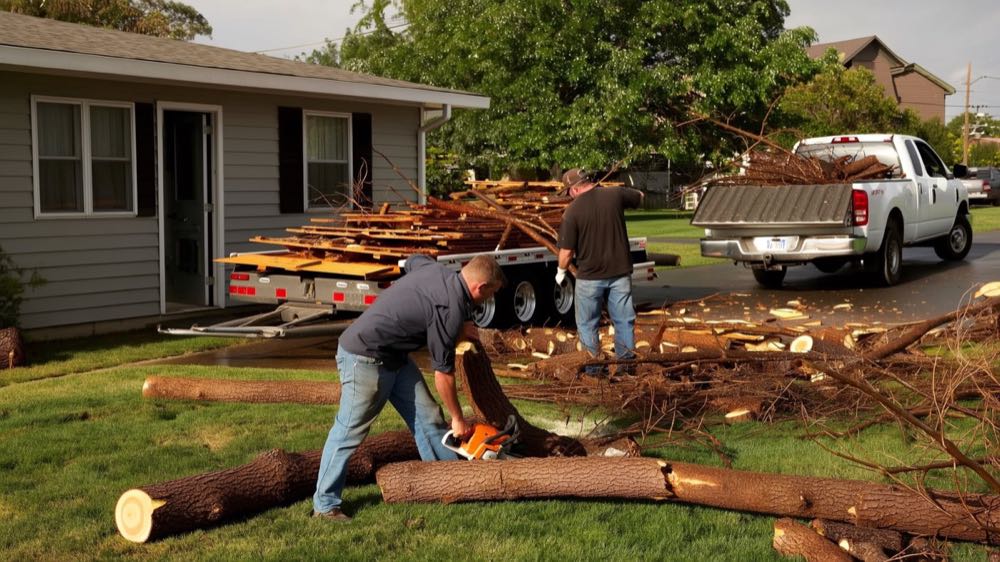
Central Mississippi gets its storms from March to May and again in the fall, and the morning after there are limbs in the yard, a fence on the ground and shingles in the flower beds. We haul it. The everyday yard mess goes too: brush cut along a lot line, rotten landscaping timbers, shrubs that died, the heap behind the shed.
When a storm is declared, Hinds, Madison and Rankin counties send their own debris trucks around; the quote marks which part of your pile they will take for nothing, and the crew hauls what is left.
What a storm and yard debris cleanup job involves
- Photo of the yard; quote by load
- Saws on the truck for limbs and trunks that have to be cut to length
- Picked up and hauled, normally a day or two after the storm line passes
- Yard raked clear
What's included
- Saws for cutting limbs and panels to length
- Loading and hauling within a day or two of the storm
- Fence panels, roofing and shed pieces in the same load
- Yard raked clear before the crew leaves
- A note on the quote about what a public pickup would take free
Not this crew's job
- Standing, leaning or roof-resting trees (tree crew first)
- Anything touching a power line (utility first)
- Stump grinding
Storm cleanup across the Jackson metro
Central Mississippi gets its storm lines from March to May and again in the fall, and the morning after one there are limbs in the yard, a fence on the ground and shingles in the flower beds from Clinton in the west to Brandon in the east. The metro's big oaks and pines are the reason: they come down on fences, sheds and carports every spring. On those mornings the crew books by neighborhood so the truck stays close and gets to more yards.
What the public pickups take depends on where you live. Inside Jackson, the city's regular collection is not built for storm piles, and construction-type debris such as fencing and roofing is barred from the curb altogether. In rural Hinds County, limb piles and yard waste can be collected by arrangement with the county's public works office. After a declared storm the counties run their own vegetation pickups, which can take weeks. The quote says which part of your pile a public pickup would take for nothing.
Ordinary yard debris is the same job without the weather: brush from a lot line, dead shrubs, old landscaping timbers, the pile behind the shed that has been there since the last cleanup. The crew brings saws for anything that has to be cut to length and rakes the area clear before leaving. Standing trees and anything on a roof or a power line are a tree crew's work first; hauling comes after.
Storm and Yard Debris Cleanup pricing in Jackson
Storm and yard debris is priced by the load with the cutting and loading inside the number: a quarter truck of limbs and brush runs $225 to $325, a half truck $375 to $500, and a full truck, which is what a downed oak and a fence line usually make, $625 to $800. Fence panels, roofing and shed pieces ride in the same load at the same rate.
What moves the price up: a tree that needs sectioning before it can be lifted, debris scattered across a large lot rather than in one pile, and a same-day request in the middle of a storm week when every yard in the metro is calling. What moves it down: limbs already cut and stacked near the street, and waiting a day or two after the storm line passes.
Full price list and what moves the price →
Related: Bulk Trash Pickup in Jackson: What the City Takes and What It Won't, Junk removal in Clinton, Junk removal in Flowood. Official page: City of Jackson.
Storm and Yard Debris Cleanup questions, answered
What's the cheapest way to get rid of storm debris in Jackson?
Stack the vegetation at the curb and wait for a public pickup. After a declared storm the counties collect limbs and brush on their own schedule, and rural Hinds County residents can arrange limb and yard waste collection through the county's public works office. That costs nothing but can take weeks, and it will not take fencing, roofing or shed pieces. A crew hauls the whole mixed pile within a day or two, priced by the load.
How soon after a storm can you come?
Usually within a day or two of the storm line passing. The first calls are for debris blocking a driveway or lying against a house, then the rest by neighborhood so the truck stays close. If a tree is on the roof or across a power line, a tree crew and the utility go first; the hauling crew takes the limbs, fence panels and roofing once it is safe to work the yard.
Do you take down a tree that is still standing?
No. A standing tree, a leaning tree or anything resting on a roof or a line is a job for a tree crew with the rigging and the insurance for it. Once it is on the ground, the hauling crew cuts the limbs to length, loads the brush, the trunk sections and whatever else the storm left, and rakes the yard clear.